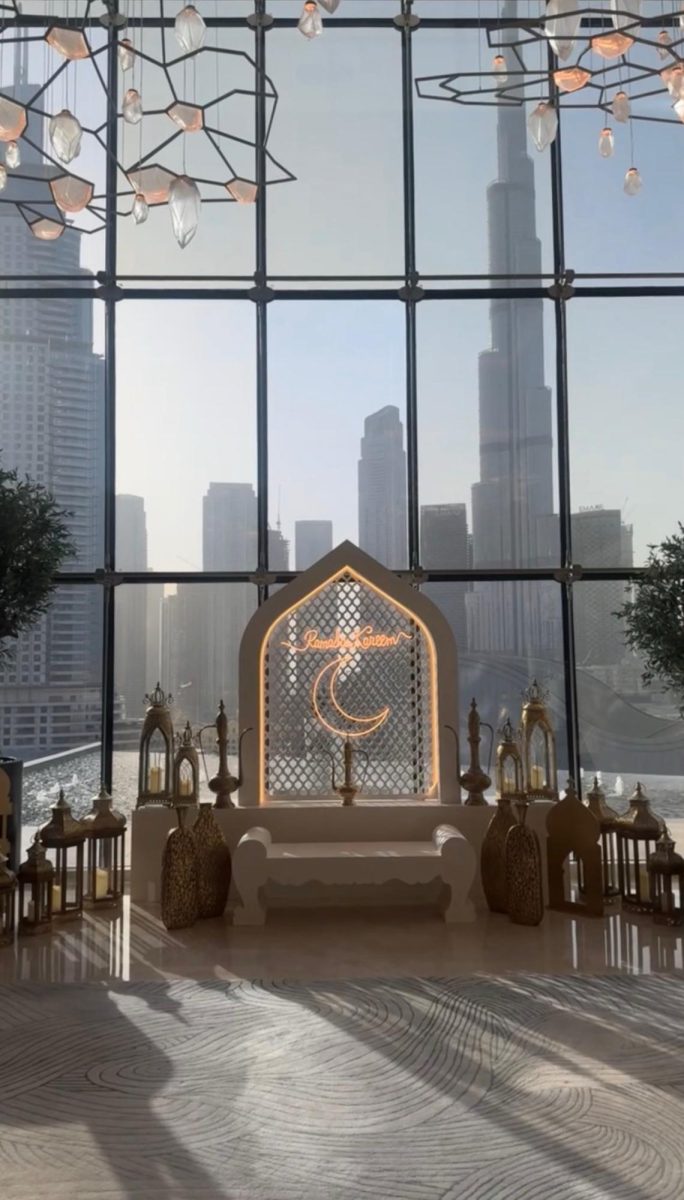
Every year, a little before sunrise, Muslim homes around the world quietly come to life. Kitchens glow with light, water pours into glasses, dates are placed on plates, and families sit together while the rest of the world is still asleep. It is peaceful, as if the world has paused for a moment.
Then the fast begins.
For many people watching from the outside, Ramadan looks simple: Muslims don’t eat or drink during the day. But that description misses almost everything that actually matters about it. Fasting is only the surface; what Ramadan really brings is a shift in how people live their lives. But for Muslims, Ramadan is not defined by what they give up. It’s defined by what they gain.
It is a month that rearranges the heart. Masjids, a dedicated place of worship for muslims, congregate with people praying shoulder to shoulder. Charity increases. Meals are shared. Forgiveness is offered. People slow down long enough to reflect on who they are and who they want to become. People suddenly become aware of things they normally move past without noticing. Time stretches differently. Small habits become visible. Everything feels more intentional.
Ramadan is never supposed to feel heavy.
One of its most powerful lessons is perspective. This month teaches its followers that when a person willingly steps away from comfort for part of the day, it becomes easier to understand how precious simple things really are. Waiting until sunset for something as simple as water can completely change how valuable that glass feels.
And strangely, by giving something up for a while, it feels like one can gain much more in return.
We gain clarity and appreciation for the small blessings that fill everyday life. Gratitude stops being a vague idea and becomes something tangible.
Perspective shifts in small but meaningful ways, and with that shift comes joy. In fact, one of the most beautiful aspects of Ramadan is how joyful it becomes. The warmth of this month is one that people who grow up with Ramadan recognize instantly.
It is in the quiet early mornings.
It is in the act of late night prayer.
It is in the anticipation before sunset.
Moments of joy exist all the time. Most people simply move too quickly to notice it. Ramadan slows that pace down.
One of the lessons that Ramadan brings each year is in the act of noticing. Fasting is often described as a form of discipline, but what people rarely talk about is the awareness that grows alongside it. When the rhythm of the day changes, small things begin to stand out in ways that they normally wouldn’t. And once you learn to notice it, that awareness doesn’t disappear when the month ends.
Anyone can practice living with more intention. Pay attention to how time is spent. Notice the moments that normally pass by unnoticed. Allow space for quiet instead of constantly filling it.
When people begin to live this way, something subtle changes. Days stop feeling like a blur of responsibilities and start feeling more like experiences worth paying attention to.
For Muslims, Ramadan is a religious obligation amongst many other things. It reminds us that intention matters, that gratitude can transform ordinary moments, and that joy is often found in the calm spaces where people choose to pause and be present.
The world itself hasn’t changed.
But the way it is being lived in has.